17 Sep 2026
Tracing the Supply Chain Behind Professional Live Dealer Equipment
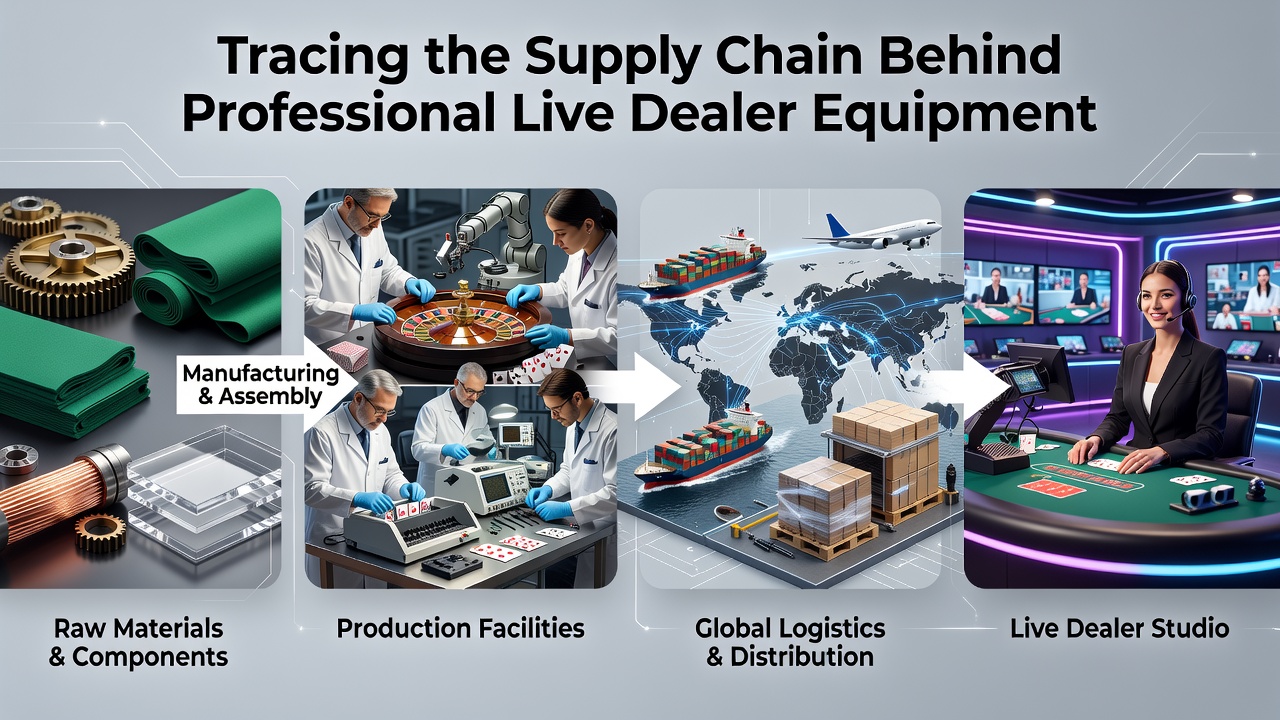
Professional live dealer equipment forms the backbone of streamed casino experiences, and its supply chain stretches across continents, suppliers, and regulatory checkpoints before any table goes live. Manufacturers source specialized components such as high-definition cameras, RFID-enabled chips, and precision-engineered roulette wheels from facilities in Asia, Europe, and North America, while assembly often occurs in dedicated hubs that meet strict gaming standards.
Raw Material Acquisition and Component Fabrication
Production begins with raw materials including optical-grade glass for lenses, rare earth metals for sensors, and durable polymers for table surfaces, and these elements travel from mining operations in Australia and South America to processing plants in China and Germany. Component fabrication follows, where firms produce CMOS sensors for cameras and custom circuit boards that handle real-time video encoding, and data from industry reports shows that over 60 percent of these parts originate in East Asian factories before moving to secondary suppliers for calibration.
Specialized items like automated card shufflers and wheel rotors require precision machining, and companies in Italy and Switzerland frequently handle this stage because their equipment meets tolerances demanded by gaming authorities. What's interesting is how traceability systems now embed serial numbers at this point, allowing downstream operators to verify each part's origin through blockchain-style logs that regulators review during audits.
Assembly, Testing, and Certification Processes
Once components arrive at assembly plants, typically located in Eastern Europe or the United States, technicians integrate them into complete studio setups that include multi-camera arrays, lighting rigs, and dealer terminals. Testing protocols run for weeks, covering everything from latency under 100 milliseconds to compliance with electromagnetic interference limits, adn facilities maintain climate-controlled environments to simulate actual studio conditions.
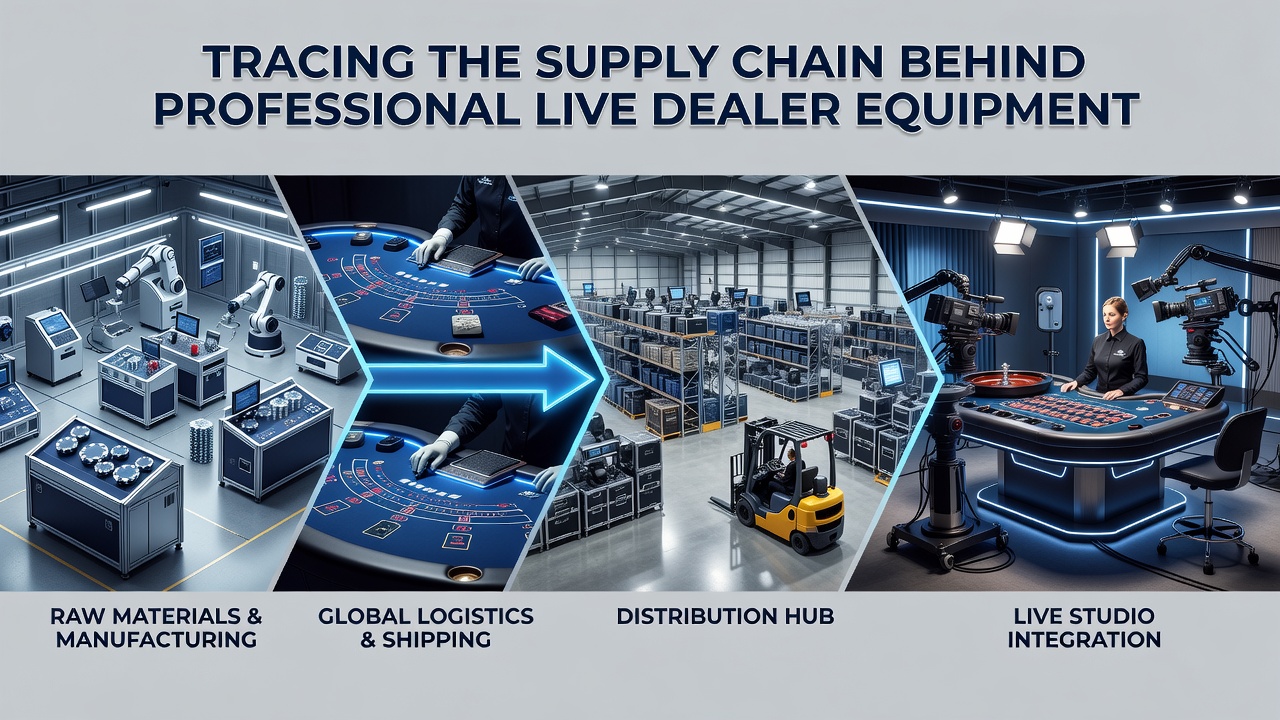
Certification comes next, and independent laboratories validate that equipment adheres to jurisdictional rules before shipment. According to the Nevada Gaming Control Board, all imported live dealer hardware must pass RNG verification and physical security checks, while similar requirements from the Malta Gaming Authority apply to European studios. These steps prevent tampering and ensure consistent performance across global operations.
Logistics, Distribution, and Integration into Studios
Distribution networks move finished equipment via air and sea freight to live casino facilities in New Jersey, Michigan, and Pennsylvania, as well as international locations. Customs procedures add layers of documentation, and temperature-controlled containers protect sensitive electronics during transit. Upon arrival, on-site teams connect hardware to streaming servers and integrate it with proprietary software platforms that manage bets and payouts in real time.
Observers note that supply chain disruptions, such as those experienced in 2021 and 2022, prompted operators to diversify suppliers and stockpile critical parts like camera modules. Projections indicate that by September 2026, several major providers plan to shift more assembly to near-shore facilities in Mexico and Eastern Europe to reduce lead times and shipping costs.
Emerging Technologies and Future Supply Chain Adjustments
Recent advancements incorporate AI-driven quality control during manufacturing and 5G-enabled cameras that reduce cabling requirements, and these innovations originate from partnerships between gaming firms and tech companies in Silicon Valley and South Korea. Research from the International Gaming Institute at the University of Nevada, Las Vegas highlights how such integrations improve reliability while lowering long-term maintenance demands.
Supply chain transparency tools continue to evolve, with many operators adopting digital twins that model equipment performance before physical installation. This approach allows teams to identify potential failures in advance and adjust sourcing strategies accordingly, and figures from trade associations reveal that adoption rates for these systems rose by 35 percent between 2023 and 2025.
Conclusion
The supply chain supporting professional live dealer equipment involves coordinated efforts across raw material extraction, precision manufacturing, rigorous testing, and global logistics, all while satisfying multiple regulatory frameworks. As technology advances and operators seek greater resilience, these networks adapt through diversified sourcing and digital tracking methods that maintain compliance and operational continuity.