1 Oct 2026
The Timeline of State Regulations Opening Doors to Live Dealer Gaming
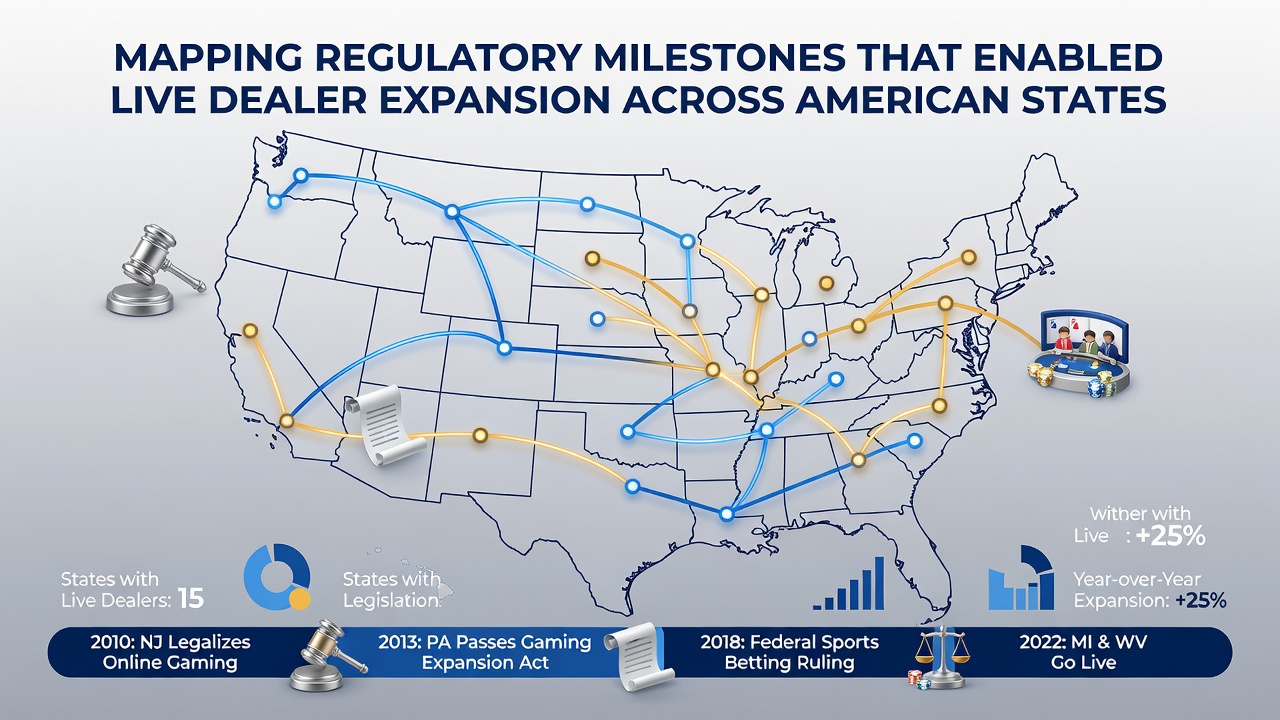
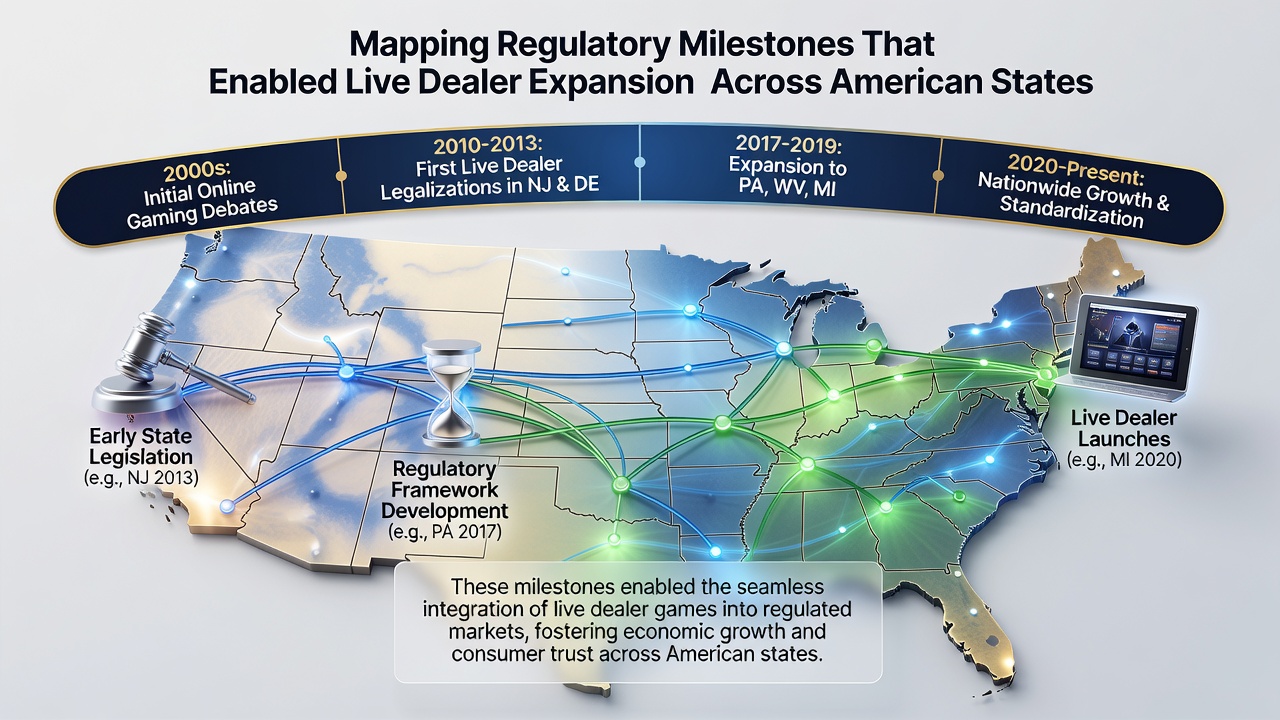
State governments began reshaping the landscape for live dealer gaming through targeted legislation that legalized online casino platforms equipped with real-time video streams from physical tables, and these changes unfolded gradually across multiple jurisdictions starting in the early 2010s. New Jersey led the way in 2013 when lawmakers passed the Internet Gaming Act, which authorized licensed operators to offer live dealer blackjack, roulette, and baccarat directly to in-state players through regulated websites, and this framework required strict geofencing along with oversight from the Division of Gaming Enforcement to ensure compliance with player age and location rules.
Early Adoptions Set the Foundation
Delaware followed shortly afterward with its own online gaming authorization in 2013, yet the state's smaller market limited initial live dealer rollout until partnerships with larger operators expanded options, while Nevada maintained tighter controls that permitted only intrastate mobile wagering tied to physical casino floors, and these early models demonstrated how regulatory language could either accelerate or constrain the deployment of studio-based dealer feeds. Researchers at various academic institutions have documented how these initial statutes influenced subsequent bills in neighboring states by providing templates for licensing, taxation, and consumer protections.
Pennsylvania entered the picture in 2017 when the legislature approved online casino gaming as part of a broader tax reform package, and the Pennsylvania Gaming Control Board issued the first live dealer licenses in 2019, which allowed operators to connect players to tables in Philadelphia and Pittsburgh casinos through high-definition streams. Data from industry reports shows that these approvals coincided with increased broadband penetration in urban areas, enabling smoother video connections that supported real-time betting without noticeable lag.
Midwest and Northeast Expansions Build Momentum
Michigan legalized online casinos in 2019 through a pair of bills signed into law, and the Michigan Gaming Control Board began accepting live dealer applications in 2021 after establishing technical standards for streaming equipment and dealer certification, and this process required operators to maintain local servers while complying with tribal gaming compacts that affected revenue sharing. Observers note that Michigan's approach incorporated lessons from New Jersey's experience, particularly around responsible gaming tools such as session limits and self-exclusion databases that integrated directly into live dealer interfaces.
West Virginia and Connecticut joined the group in 2020 and 2021 respectively, each enacting legislation that permitted live dealer games hosted at existing racetracks or casinos, and these states implemented revenue-sharing agreements with tribal nations in Connecticut that added another layer of regulatory complexity. Figures from state gaming commissions reveal steady growth in handle volumes once platforms went live, with live dealer variants accounting for a significant share of total online play in the first full year of operation.
Recent Developments and Cross-Border Considerations
By October 2026 additional states including New York and Massachusetts continue to review proposals that would extend similar licensing structures to live dealer offerings, and these discussions often reference model legislation developed by multi-state gaming associations that emphasize uniform technical audits for video integrity and payout verification. According to reports from the American Gaming Association, regulatory harmonization efforts across state lines have reduced some compliance burdens for operators seeking multi-jurisdictional licenses, although each state retains independent authority over local tax rates and advertising restrictions.
One study released by a Canadian research institute compared North American regulatory timelines and found that states adopting legislation after 2018 tended to incorporate more advanced responsible gaming features from the outset, such as real-time alerts during live sessions and mandatory breaks, and these additions reflected evolving standards influenced by European regulatory bodies in jurisdictions outside the United Kingdom. Operators have adapted by building modular platforms that can toggle state-specific rules without disrupting the core live dealer experience.
Conclusion
The progression of state regulations has created a patchwork of legal environments where live dealer gaming now operates under varying degrees of oversight, and this structure continues to evolve as new bills move through legislative sessions in additional states. Data indicates that states with established frameworks maintain higher operational standards for streaming quality and dealer training, while newer entrants benefit from refined technical requirements developed through industry collaboration with regulatory agencies. Those who track these milestones observe that the cumulative effect has expanded access for players in participating states while preserving state-level control over licensing and consumer safeguards.